
The construction industry is a major employment sector globally but is characterized by complex operations and high exposure to occupational hazards, which pose risks to workers’ physical, psychological, and social well-being. This study evaluated the role of construction management in mitigating occupational health hazards and promoting worker well-being in selected construction companies within Auchi, Edo State, Nigeria. A survey research design was employed, administering structured questionnaires to project managers, site engineers, safety officers, and site workers across five companies. Data were analyzed using descriptive statistics and inferential techniques (regression and ANOVA) via SPSS. Findings indicate that the workforce is predominantly male (86.66%), largely within the 34–49-year age group (43.80%), married (58.09%), and well-educated (53.33% tertiary education). While awareness of basic safety practices and personal protective equipment (PPE) was high, compliance varied across sites and tasks. Most respondents avoided using mobile phones (81.00%) and worked cautiously around unfinished or hazardous areas (94.29%), though electrical hazard exposure remained significant (39.00% frequently troubleshooting). Weather rarely affected PPE use (69.52%), and prior safety orientation positively influenced adherence to safety protocols (76.19%). The study concludes that effective construction management—through safety orientation, supervision, and enforcement—is critical for reducing occupational hazards and enhancing worker well-being. Continuous training, hazard monitoring, and systematic implementation of safety policies are recommended to achieve sustainable construction practices.
| Published in | Journal of Civil, Construction and Environmental Engineering (Volume 11, Issue 3) |
| DOI | 10.11648/j.jccee.20261103.16 |
| Page(s) | 119-129 |
| Creative Commons |
This is an Open Access article, distributed under the terms of the Creative Commons Attribution 4.0 International License (http://creativecommons.org/licenses/by/4.0/), which permits unrestricted use, distribution and reproduction in any medium or format, provided the original work is properly cited. |
| Copyright |
Copyright © The Author(s), 2026. Published by Science Publishing Group |
Construction Management, Occupational Health, Safety Management, Well-being, Construction Industry
S/N | Stakeholder Group |
|---|---|
1 | Clients / Project Owners |
2 | Construction / Project Managers |
3 | Site Engineers / Supervisors |
4 | Contractors and Subcontractors |
5 | Workers / Trade Unions |
6 | Health, Safety and Environmental (HSE) Officers |
7 | Designers / Consultants |
8 | Regulatory and Government Agencies |
9 | Professional Associations |
10 | Financial Institutions and Insurance Companies |
11 | Local Communities and NGOs |
Gender of Respondents | Frequency of respondents in different companies | ||||||
|---|---|---|---|---|---|---|---|
Mother Cat Company | Freedom Group of Company | Yak and Company Limited | GFOL Company Limited | Geopex Mining and Minerals Processing Ltd | Percentage (%) | Rank (R) | |
Male | 17 | 13 | 22 | 16 | 23 | 86.66 | 1 |
Female | 3 | 2 | 3 | 4 | 2 | 13.34 | 2 |
Total | 20 | 15 | 25 | 20 | 25 | 105/100 | |
Age of Respondents | Frequency of respondents in different companies | ||||||
|---|---|---|---|---|---|---|---|
Mother Cat Company | Freedom Group of Company | Yak and Company Limited | GFOL Company Limited | Geopex Mining and Minerals Processing Ltd | Percentage (%) | Rank (R) | |
18 - 33 | 10 | 4 | 8 | 9 | 7 | 36.19 | 2 |
34 - 49 | 8 | 9 | 12 | 7 | 10 | 43.80 | 1 |
50 – 65 | 2 | 1 | 3 | 4 | 5 | 14.28 | 3 |
66 – 81 | 0 | 1 | 2 | 0 | 3 | 5.71 | 4 |
Total | 20 | 15 | 25 | 20 | 25 | 105/100 | |
Marital status of Respondents | Frequency of respondents in different companies | ||||||
|---|---|---|---|---|---|---|---|
Mother Cat Company | Freedom Group of Company | Yak and Company Limited | GFOL Company Limited | Geopex Mining and Minerals Processing Ltd | Percentage (%) | Rank (R) | |
Single | 11 | 7 | 11 | 5 | 9 | 40.95 | 2 |
Married | 9 | 8 | 13 | 15 | 16 | 58.09 | 1 |
Others | 0 | 0 | 1 | 0 | 0 | 0.95 | 3 |
Total | 20 | 15 | 25 | 20 | 25 | 105/100 | |
Level of Education of Respondents | Frequency of respondents in different companies | ||||||
|---|---|---|---|---|---|---|---|
Mother Cat Company | Freedom Group of Company | Yak and Company Limited | GFOL Company Limited | Geopex Mining and Minerals Processing Ltd | Percentage (%) | Rank (R) | |
Vocational | 3 | 5 | 7 | 3 | 6 | 22.86 | 2 |
Primary | 1 | 0 | 2 | 1 | 2 | 5.71 | 4 |
Secondary | 4 | 1 | 5 | 6 | 3 | 18.10 | 3 |
Tertiary | 12 | 9 | 11 | 10 | 14 | 53.33 | 1 |
Total | 20 | 15 | 25 | 20 | 25 | 105/100 | |
Type of organization of Respondents | Frequency of respondents in different companies | ||||||
|---|---|---|---|---|---|---|---|
Mother Cat Company | Freedom Group of Company | Yak and Company Limited | GFOL Company Limited | Geopex Mining and Minerals Processing Ltd | Percentage (%) | Rank (R) | |
Client (e.g., government, developers) | 0 | 0 | 0 | 0 | 0 | 0.00 | 4 |
Consultant | 5 | 1 | 1 | 2 | 0 | 8.57 | 2 |
Contractor | 15 | 14 | 23 | 18 | 24 | 89.52 | 1 |
Others | 0 | 0 | 1 | 0 | 1 | 1.90 | 3 |
Total | 20 | 15 | 25 | 20 | 25 | 105/100 | |
Respondents that use phone while working on site | Frequency of respondents in different companies | ||||||
|---|---|---|---|---|---|---|---|
Mother Cat Company | Freedom Group of Company | Yak and Company Limited | GFOL Company Limited | Geopex Mining and Minerals Processing Ltd | Percentage (%) | Rank (R) | |
Always | 0 | 0 | 0 | 0 | 0 | 0.00 | 4 |
Almost | 2 | 1 | 1 | 1 | 2 | 7.00 | 3 |
Seldom | 3 | 2 | 1 | 2 | 4 | 12.00 | 2 |
Never | 15 | 12 | 18 | 17 | 19 | 81.00 | 1 |
Total | 20 | 15 | 20 | 20 | 25 | 100/100 | |
Respondents that work through dangerous and unfinished work in site | Frequency of respondents in different companies | ||||||
|---|---|---|---|---|---|---|---|
Mother Cat Company | Freedom Group of Company | Yak and Company Limited | GFOL Company Limited | Geopex Mining and Minerals Processing Ltd | Percentage (%) | Rank (R) | |
Always | 0 | 0 | 0 | 0 | 0 | 0.00 | 4 |
Almost | 1 | 0 | 1 | 0 | 0 | 1.90 | 3 |
Seldom | 1 | 1 | 1 | 0 | 1 | 3.81 | 2 |
Never | 18 | 14 | 23 | 20 | 24 | 94.29 | 1 |
Total | 20 | 15 | 25 | 20 | 25 | 105/100 | |
Respondents that troubleshoot an electrical hazard in site | Frequency of respondents in different companies | ||||||
|---|---|---|---|---|---|---|---|
Mother Cat Company | Freedom Group of Company | Yak and Company Limited | GFOL Company Limited | Geopex Mining and Minerals Processing Ltd | Percentage (%) | Rank (R) | |
Always | 9 | 8 | 11 | 8 | 3 | 39.00 | 1 |
Almost | 1 | 0 | 5 | 6 | 3 | 15.00 | 4 |
Seldom | 5 | 4 | 7 | 3 | 8 | 27.00 | 2 |
Never | 5 | 3 | 2 | 3 | 6 | 19.00 | 3 |
Total | 20 | 15 | 25 | 20 | 20 | 100/100 | |
Respondents that weather as a factor affects for not using any safety equipment | Frequency of respondents in different companies | ||||||
|---|---|---|---|---|---|---|---|
Mother Cat Company | Freedom Group of Company | Yak and Company Limited | GFOL Company Limited | Geopex Mining and Minerals Processing Ltd | Percentage (%) | Rank (R) | |
Always | 0 | 0 | 2 | 1 | 3 | 5.71 | 4 |
Almost | 3 | 2 | 4 | 1 | 1 | 10.48 | 3 |
Seldom | 2 | 3 | 5 | 2 | 3 | 14.29 | 2 |
Never | 15 | 10 | 14 | 16 | 18 | 69.52 | 1 |
Total | 20 | 15 | 25 | 20 | 25 | 105/100 | |
Respondents that are given prior orientation on hazard management before starting work | Frequency of respondents in different companies | ||||||
|---|---|---|---|---|---|---|---|
Mother Cat Company | Freedom Group of Company | Yak and Company Limited | GFOL Company Limited | Geopex Mining and Minerals Processing Ltd | Percentage (%) | Rank (R) | |
Always | 17 | 13 | 20 | 11 | 19 | 76.19 | 1 |
Almost | 2 | 1 | 3 | 7 | 4 | 16.19 | 2 |
Seldom | 1 | 1 | 2 | 2 | 2 | 7.62 | 3 |
Never | 0 | 0 | 0 | 0 | 0 | 0.00 | 4 |
Total | 20 | 15 | 25 | 20 | 25 | 105/100 | |
PPE | Personal Protective Equipment |
HSE | Health, Safety, and Environmental |
ANOVA | Analysis of Variance |
SDG | Sustainable Development Goal |
α | Coefficient of Safety |
β | Hazard Exposure Factor |
γ | Risk Weight |
| [1] | Agyekum, K., Simons, B. and Yeboah, S. (2018). Factors influencing the performance of safety programmes in the Ghanaian construction industry. Journal of Engineering, Design and Technology, 25(2), pp. 39–61. |
| [2] | Ai Lin Teo, E. and Yean Yng Ling, F. (2006). Developing a model to measure the effectiveness of safety management systems of construction sites. Building and Environment, 41, pp. 1584–1592. |
| [3] | Behm, M. (2005). Linking construction fatalities to the design for construction safety concept. Safety Science, 43(8), pp. 589–611. |
| [4] | Bowen, P., Edwards, P. and Lingard, H. (2013). Workplace stress experienced by construction professionals in South Africa. Journal of Construction Engineering and Management, 139(4), pp. 393–403. |
| [5] | Cameron, I. and Duff, R. (2007). Use of performance measurement and goal setting to improve construction managers' focus on health and safety. Construction Management and Economics, 25, pp. 869–881. |
| [6] | Choudhry, R. M. and Fang, D. (2008). Why operatives engage in unsafe work behavior. Journal of Construction Engineering and Management, 134(4), pp. 242–251. |
| [7] | Conchie, S., Moon, S. and Duncan, M. (2013). Supervisors' engagement in safety leadership. Safety Science, 51, pp. 109–117. |
| [8] | Creswell, J. W. (2014). Research Design: Qualitative, Quantitative, and Mixed Methods Approaches. Thousand Oaks, CA: Sage Publications. |
| [9] | Fang, D., Chen, Y. and Wong, L. (2006). Safety climate in the construction industry. Journal of Construction Engineering and Management, 132(11), pp. 1146–1152. |
| [10] | Field, A. (2013). Discovering Statistics Using IBM SPSS Statistics. London: Sage. |
| [11] | George, D. and Mallery, P. (2003). SPSS for Windows Step by Step. Boston: Allyn & Bacon. |
| [12] | International Labour Organization (2011). Health and Safety Hazards in the Construction Industry. |
| [13] | Jones, W., Gibb, A., Haslam, R. and Dainty, A. (2019). Work-related ill-health in construction. Safety Science, 120, pp. 538–550. |
| [14] | Kines, P., Andersen, L., Spangenberg, S., Mikkelsen, K., Dyreborg, J. and Zohar, D. (2010). Improving construction site safety through leader-based verbal safety communication. Journal of Safety Research, 41, pp. 399–406. |
| [15] | Langdon, R. R. and Sawang, S. (2018). Construction workers’ well-being. Journal of Construction Engineering and Management, 144(2). |
| [16] | Lingard, H. and Rowlinson, S. (2005). Occupational Health and Safety in Construction Project Management. London: Routledge. |
| [17] | Lingard, H. and Turner, M. (2017). Promoting construction workers’ health. Construction Management and Economics, 35(5), pp. 238–253. |
| [18] | Marks, N., Clark, A., Siegrist, J., Stutzer, A., Vittersø, J. and Wahrendorf, M. (2009). Measuring wellbeing across Europe. Social Indicators Research, 91, pp. 301–315. |
| [19] | Mitropoulos, P. and Cupido, G. (2009). The role of production and teamwork practice in construction safety. Journal of Safety Research, 40, pp. 265–275. |
| [20] | World Health Organization (2001). The World Health Report 2001: Mental Health – New Understanding, New Hope. |
| [21] | Yiu, N. S., Chan, D. W. and Sze, N. (2019). Implementation of a safety management system in managing construction projects. Safety Science, 117, pp. 23–32. |
| [22] | Zafar, J. and Chileshe, N. (2018). Analysis of health and well-being practices among older construction workers. In: Proceedings of the 34th ARCOM Conference, pp. 341–350. |
| [23] | Zou, P. X. and Sunindijo, R. Y. (2015). Strategic Safety Management in Construction and Engineering. Hoboken: Wiley. |
APA Style
Imentinyan, O. J., Olayinka, I. A., Wasiu, J. (2026). Construction Management Role in Mitigating Well-being and Occupational Health Hazards. Journal of Civil, Construction and Environmental Engineering, 11(3), 119-129. https://doi.org/10.11648/j.jccee.20261103.16
ACS Style
Imentinyan, O. J.; Olayinka, I. A.; Wasiu, J. Construction Management Role in Mitigating Well-being and Occupational Health Hazards. J. Civ. Constr. Environ. Eng. 2026, 11(3), 119-129. doi: 10.11648/j.jccee.20261103.16
@article{10.11648/j.jccee.20261103.16,
  author = {Ogbebor John Imentinyan and Ibrahim Abdulrazaq Olayinka and John Wasiu},
  title = {Construction Management Role in Mitigating Well-being and Occupational Health Hazards},
  journal = {Journal of Civil, Construction and Environmental Engineering},
  volume = {11},
  number = {3},
  pages = {119-129},
  doi = {10.11648/j.jccee.20261103.16},
  url = {https://doi.org/10.11648/j.jccee.20261103.16},
  eprint = {https://article.sciencepublishinggroup.com/pdf/10.11648.j.jccee.20261103.16},
  abstract = {The construction industry is a major employment sector globally but is characterized by complex operations and high exposure to occupational hazards, which pose risks to workers’ physical, psychological, and social well-being. This study evaluated the role of construction management in mitigating occupational health hazards and promoting worker well-being in selected construction companies within Auchi, Edo State, Nigeria. A survey research design was employed, administering structured questionnaires to project managers, site engineers, safety officers, and site workers across five companies. Data were analyzed using descriptive statistics and inferential techniques (regression and ANOVA) via SPSS. Findings indicate that the workforce is predominantly male (86.66%), largely within the 34–49-year age group (43.80%), married (58.09%), and well-educated (53.33% tertiary education). While awareness of basic safety practices and personal protective equipment (PPE) was high, compliance varied across sites and tasks. Most respondents avoided using mobile phones (81.00%) and worked cautiously around unfinished or hazardous areas (94.29%), though electrical hazard exposure remained significant (39.00% frequently troubleshooting). Weather rarely affected PPE use (69.52%), and prior safety orientation positively influenced adherence to safety protocols (76.19%). The study concludes that effective construction management—through safety orientation, supervision, and enforcement—is critical for reducing occupational hazards and enhancing worker well-being. Continuous training, hazard monitoring, and systematic implementation of safety policies are recommended to achieve sustainable construction practices.},
 year = {2026}
}
TY  - JOUR
T1  - Construction Management Role in Mitigating Well-being and Occupational Health Hazards
AU  - Ogbebor John Imentinyan
AU  - Ibrahim Abdulrazaq Olayinka
AU  - John Wasiu
Y1  - 2026/06/23
PY  - 2026
N1  - https://doi.org/10.11648/j.jccee.20261103.16
DO  - 10.11648/j.jccee.20261103.16
T2  - Journal of Civil, Construction and Environmental Engineering
JF  - Journal of Civil, Construction and Environmental Engineering
JO  - Journal of Civil, Construction and Environmental Engineering
SP  - 119
EP  - 129
PB  - Science Publishing Group
SN  - 2637-3890
UR  - https://doi.org/10.11648/j.jccee.20261103.16
AB  - The construction industry is a major employment sector globally but is characterized by complex operations and high exposure to occupational hazards, which pose risks to workers’ physical, psychological, and social well-being. This study evaluated the role of construction management in mitigating occupational health hazards and promoting worker well-being in selected construction companies within Auchi, Edo State, Nigeria. A survey research design was employed, administering structured questionnaires to project managers, site engineers, safety officers, and site workers across five companies. Data were analyzed using descriptive statistics and inferential techniques (regression and ANOVA) via SPSS. Findings indicate that the workforce is predominantly male (86.66%), largely within the 34–49-year age group (43.80%), married (58.09%), and well-educated (53.33% tertiary education). While awareness of basic safety practices and personal protective equipment (PPE) was high, compliance varied across sites and tasks. Most respondents avoided using mobile phones (81.00%) and worked cautiously around unfinished or hazardous areas (94.29%), though electrical hazard exposure remained significant (39.00% frequently troubleshooting). Weather rarely affected PPE use (69.52%), and prior safety orientation positively influenced adherence to safety protocols (76.19%). The study concludes that effective construction management—through safety orientation, supervision, and enforcement—is critical for reducing occupational hazards and enhancing worker well-being. Continuous training, hazard monitoring, and systematic implementation of safety policies are recommended to achieve sustainable construction practices.
VL  - 11
IS  - 3
ER  -
Department of Civil Engineering, Edo State University, Iyamho, Nigeria
Department of Civil Engineering, Edo State University, Iyamho, Nigeria
Department of Civil Engineering, Edo State University, Iyamho, Nigeria
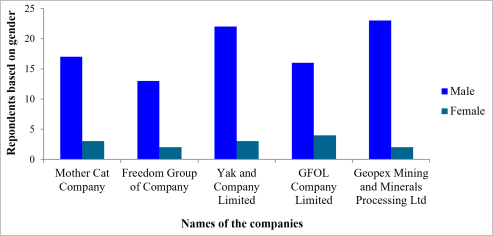
Figure 1. Respondents Based on Gender.
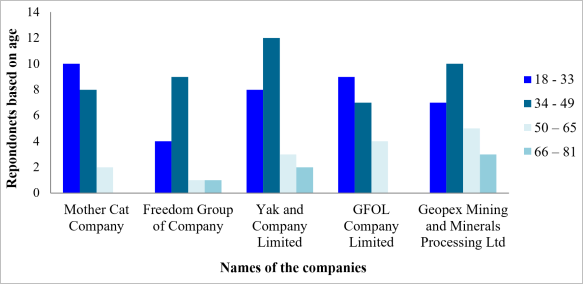
Figure 2. Respondents Based on Age.
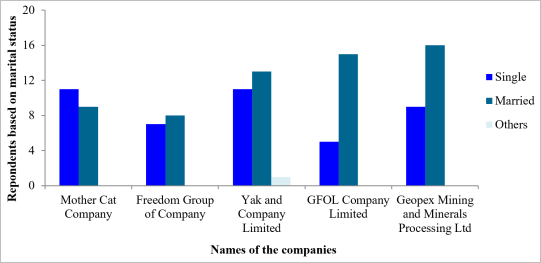
Figure 3. Respondents Based on Marital Status.
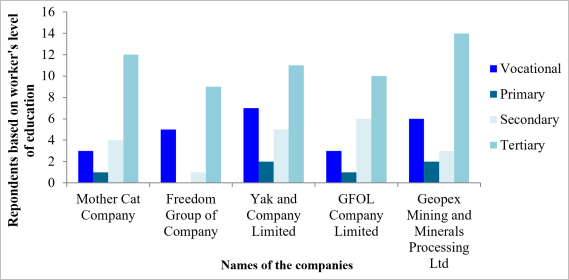
Figure 4. Respondents Based on Level of Education.
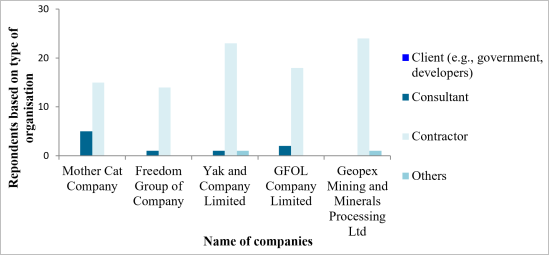
Figure 5. Respondents Based on Type of Organization.
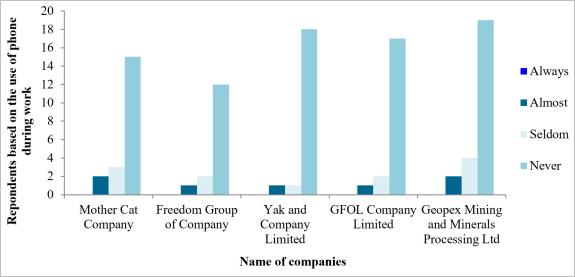
Figure 6. Respondents Based on Use of Phone While Working.
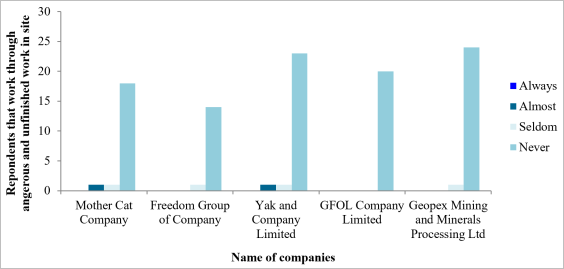
Figure 7. Respondents Working Through Dangerous Areas.
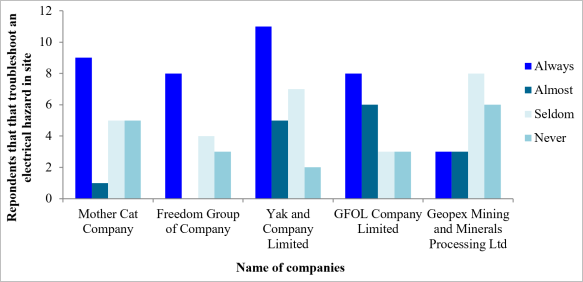
Figure 8. Respondents Troubleshooting Electrical Hazards.
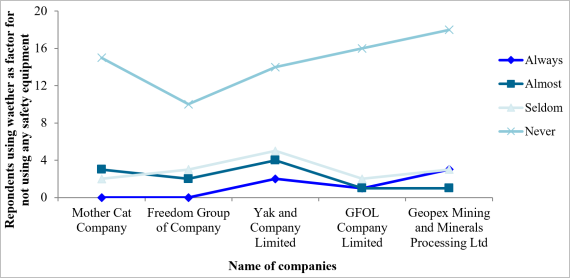
Figure 9. Effect of Weather on Use of Safety Equipment.
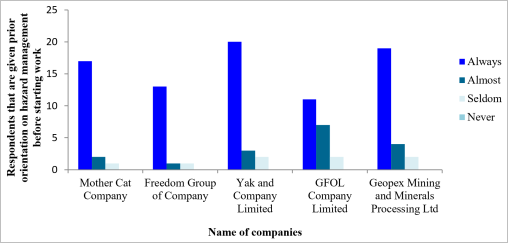
Figure 10. Respondents Given Prior Safety Orientation.

Information



 Share This Article
 Twitter
 Linked In
 Facebook
 Copy
Copy Download